
How to Start Making Money With Apps (What I Told a Dev Intern)
Hey, everyone!
Today a dev who’s still an intern sent me a message. They said they were too embarrassed to ask in the group chat, but they wanted to know: how did I start building apps that actually make money? They have their own projects, but no idea how to start selling them.
I answered right there on WhatsApp. Reading it back later, I realized it had pretty much everything I wish someone had told me when I created my Apple developer account. So I decided to put it together here.
First, the truth: our first app made zero
It took me years to find the time to ship something. Our first app was AbaetéFest, an events and tourism guide for Abaetetuba, my region in the north of Brazil. Today around 17k people use it.
Revenue? Zero.
I’m not saying this to discourage anyone. I’m saying it because having users and having revenue are two different things, and nobody tells you that at the start.
Exposure is what pays
There’s one rule I keep in my head all the time:
More people seeing it, more people downloading it, more people buying it.
And out of everyone who sees what you’re offering, only a tiny slice will pay. I work with something between 1% and 5%, which matches the market’s conversion rate benchmarks: around 2-3% is average and 5% is already considered excellent. Sounds obvious, but it changes how you plan everything.
Here’s the funnel of my workout app now that more people are reaching it:
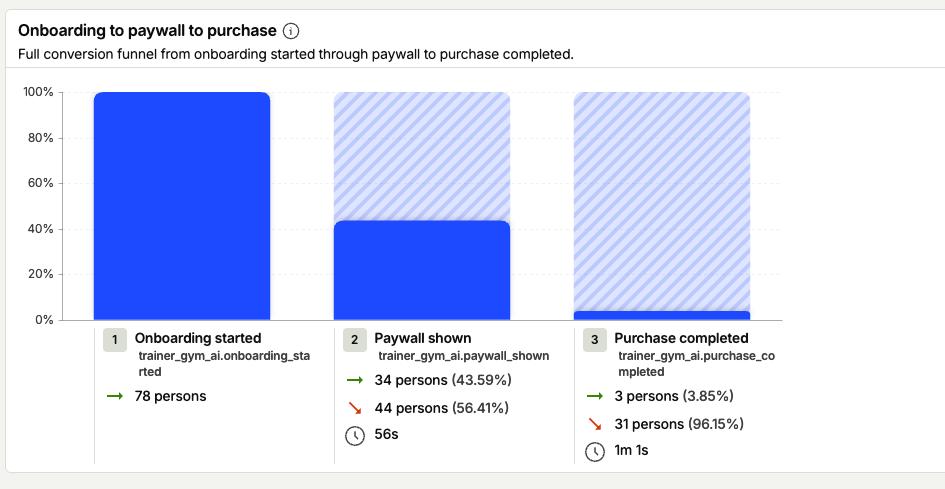
- 78 people — started onboarding
- 34 people — reached the paywall (43.59%)
- 3 people — purchased (3.85%)
Now do the math backwards. If I want around 20 paying users, I need something close to 1,000 people starting onboarding. And to get 1,000 people into onboarding, a lot more people need to have seen the app somewhere.
That’s why the real work isn’t just the code.
Solve a pain (real or imagined)
To make money you need to solve a pain, real or imagined. Usually it’s something tied to body, mind, performance, desires or fears.
The path I follow:
- Find a niche.
- Look at the top apps in that niche.
- Try to steal a slice from them, knowing there’s a crowd trying to do the exact same thing.
Before I start anything, I do this kind of research:
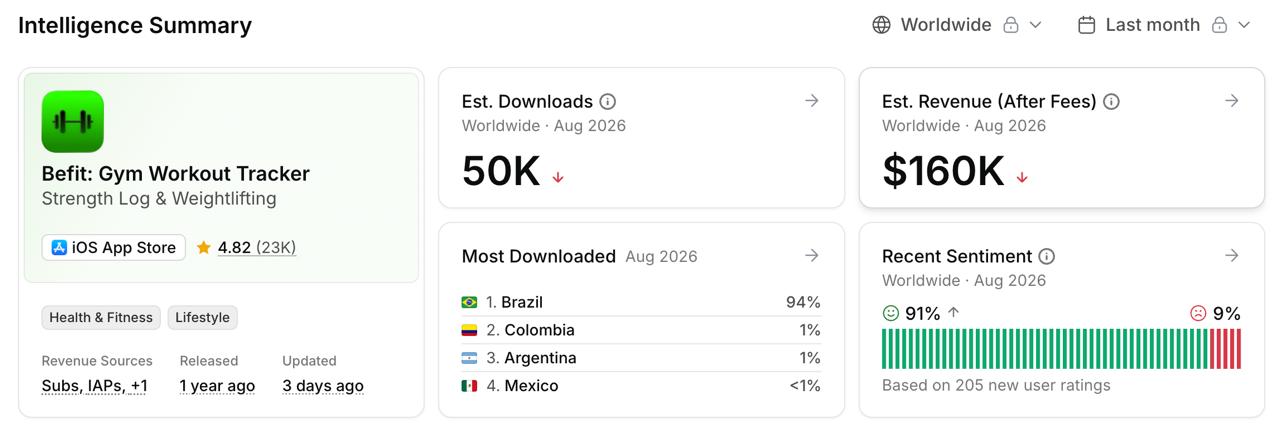
This workout app, Befit, launched a year ago. According to the tool’s estimates, it makes around 160K dollars a month from around 50K monthly downloads, and 94% of them come from Brazil. These are estimates, not official numbers, but they’re good for one thing: proving that people are paying in that niche. If nobody is paying the top apps, they probably won’t pay yours.
Consistency: the pot of gold is on day 120
This is the point that separates the ones who make it from the ones who don’t.
Create the social accounts, go to Reddit, and promote your stuff every single day. A lot of people give up on day 30. But sometimes the pot of gold is on day 120 or later, after doing it every single day without a break.
This is the YouTube channel tied to the workout app:
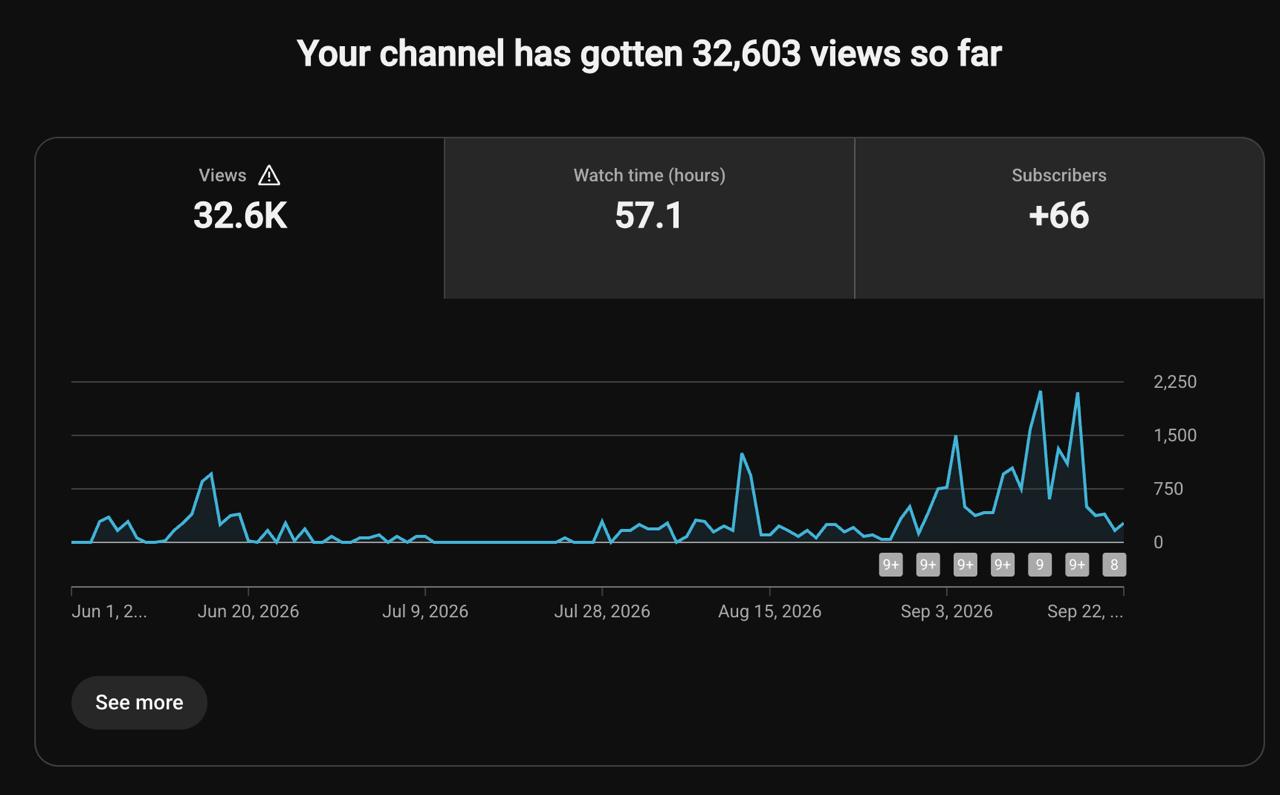
Look at the chart. From June to August it’s almost a flat line on the floor. I started being truly consistent in August, posting every day without missing one. That’s when things started to catch. More engagement and, as a result, more people watching.
It’s not easy. It’s really boring to think about and keep several social accounts going at once. What helps me:
- A password manager, so I don’t get lost in so many accounts.
- AI as much as possible to speed up the content work.
- Different formats: videos on YouTube, TikTok and Instagram, guides written as posts, and posts comparing my app with similar ones.
The ideal today is to go after things that create viral hooks, be it text, video or photos. But hooks that drive traffic to the app, not just likes.
Metrics on everything you ship
Anything you put out for other people to use needs metrics. And I don’t mean just an admin panel.
I mean tools that help you build dashboards and understand how people use the app, how the onboarding performs and so on:
- PostHog, which is where that funnel chart above came from
- Google Analytics
- Himetrica
And learn the search side too: Google Search Console and Bing Webmaster Tools. Organic traffic is the traffic you don’t pay for.
The dev who messaged me said something great: they had a widget to track plan quota usage, and 5 people gave them feedback. They guessed around 40 had used it. With metrics, you don’t guess.
What about ads?
You can use paid traffic later, run ads to understand your audience. But let me tell you how my first one went.
My first R$ 300 went to TikTok Ads. Return: nothing.
Later the reason was clear. The audience TikTok gave me was mostly Brazilian and on Android. The app back then was iPhone only.
It hurt, but that’s the cost of understanding things yourself and not depending on others. You learn by getting it wrong.
The difference between us and the big players is that they have money to burn without feeling it. More money, more ads, more people seeing it, more people paying. That’s how the digital machine works.
Don’t compare yourself to people making 10K a month
Look for people who started from a place similar to yours. The ones making 10K dollars a month are a tiny share of all the devs on the store.
And a lot of them have churn problems. If the ads machine stops, new users stop coming in.
There are some good cases on Twitter that I followed from the start. This one from Gabriel Buzzi tells how a baby-registry app for first-time moms passed 15K users and 1K subscribers in less than 2 months. It’s a great story, but look at the context: his partner has around 200K followers. With an audience, it gets much easier.
Others I like to follow:
- The folks behind Visor, a personal finance app
- Real Oficial
I see myself as pretty different from them, but you can take a lot from the way they did things over the last year, which changed their lives. The idea is to pull out the skeleton and apply it to your own context.
I’m also in Binhara’s community, where a bunch of people are making money and sharing tools and ways to run ads. And if you want a video to start with, this one from Arthur Spalanzani is good: I built a PROFITABLE app in 72 hours. Then look for other channels about making apps profitable.
To sum up
- Exposure pays. Only around 1-5% of the people who see it will pay.
- Solve a pain and check that people are already paying in that niche.
- Show up every single day. Day 30 is where most people stop.
- Metrics on everything, from the very first user.
- Ads only after you understand your audience. My R$ 300 can vouch for that.
- Compare yourself with people who started where you are, not with the 0.1%.
And most important: the sooner you start, the better it can be. It doesn’t mean it will be, but if I had started the day I created my Apple account, everything could have been different.
That’s it, folks! If you’re at this starting point too, tell me what you’re building on Twitter or LinkedIn.